Singapore's Internal Security Department has taken action against two citizens radicalised by the ongoing Israeli-Palestinian conflict, marking a concerning escalation in domestic extremist threats. The orders, issued in June, targeted Cyrus Dzulqarnain Al-Shahriar, 19, who received a restriction order, and Tarmizi Mohd Taha, 30, placed under detention. These cases bring to eight the total number of Singaporeans detained or restricted under the Internal Security Act whose radicalisation stems directly from the Gaza war that erupted following Hamas' October 2023 attacks on Israel.
Cyrus's trajectory demonstrates how contemporary extremism exploits digital platforms to convert ordinary citizens into security threats. Beginning in 2022 with innocent religious curiosity, the teenager joined online Islamic study groups before encountering anti-Western and anti-LGBTQ propaganda. His exposure to pro-Hamas narratives following the October 2023 attacks marked a turning point. By 2024, he was actively contemplating travel to Gaza to join Hamas—a plan abandoned only due to practical constraints rather than ideological recalculation. The evolution from passive consumption to active participation accelerated dramatically after joining a niche accelerationist extremist group in early 2025, where he began glorifying attacks including Al-Qaeda's September 11 operations and the 2002 Bali Bombings.
What distinguishes Cyrus's case is the phenomenon authorities describe as Composite Violent Extremism, colloquially termed a "salad bar" approach where individuals selectively combine contradictory ideological elements into personalised worldviews justifying violence. Cyrus exemplifies this hybrid threat, simultaneously adopting Islamist jihadist ideology, violent accelerationism targeting the perceived Zionist-controlled world order, and incel extremism drawn from incarcerated school shooter Elliot Rodger's manifesto. This ideological promiscuity reflects how modern extremists exploit algorithmic content recommendation to construct bespoke radical identities unconstrained by traditional organisational structures or coherent philosophical frameworks.
The second case involving Tarmizi Mohd Taha presents a different but equally alarming profile. The 30-year-old customer service officer explicitly expressed willingness to execute attacks in Singapore if instructed by Hamas. His prior experience as a logistics assistant during National Service with the Singapore Police Force—a position granting access to sensitive infrastructure—added operational capability to his ideological commitment. Tarmizi's case illustrates how radicalisation penetrates established institutional pathways, converting civil servants into potential security liabilities. That both individuals were independently radicalised yet reached similar violent conclusions underscores the systemic nature of the threat.
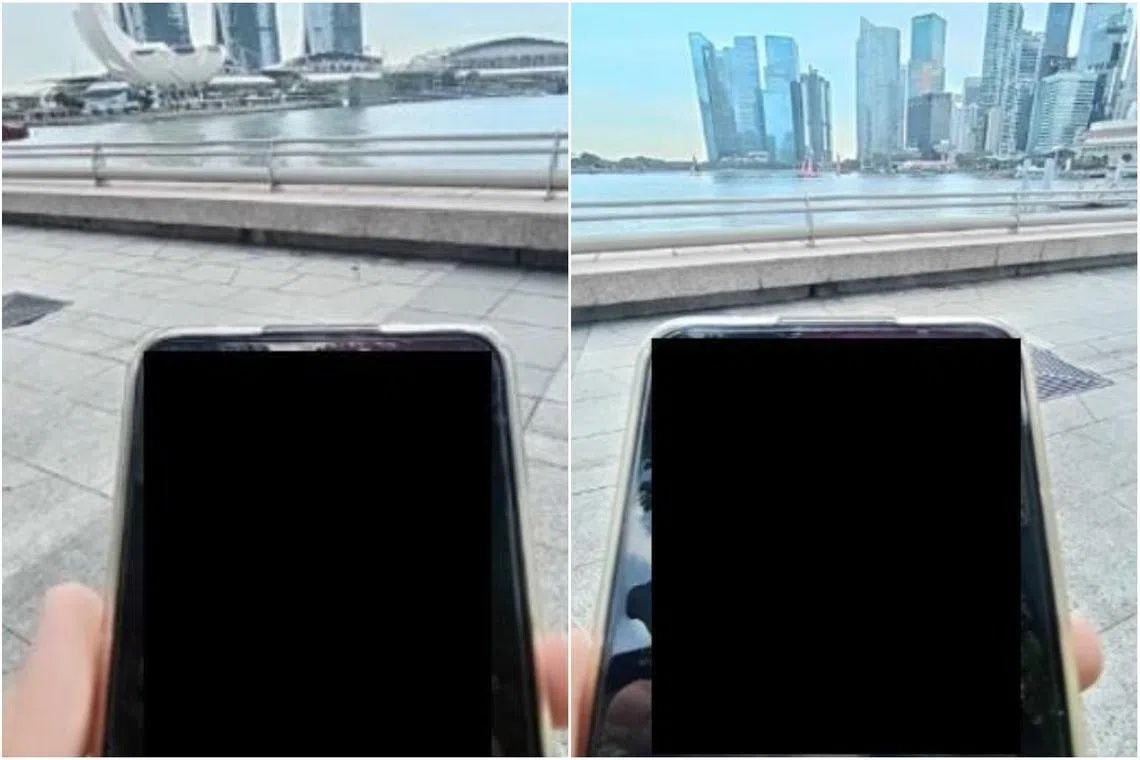
Cyrus's documented activities reveal the brazen nature of contemporary extremist recruitment and pledge-making. He photographed extremist materials at Marina Bay Sands, one of Singapore's most iconic locations, explicitly positioning himself within a transnational online movement. His public pledges of allegiance on social media, participation in "digital jihad" harassment campaigns, and creation of defamatory fake news content transformed him from ideological consumer to active propagandist. The restriction order—less stringent than Tarmizi's detention—reflects authorities' assessment that Cyrus remained in the ideation stage, never progressing beyond violent fantasies targeting schoolmates, women, and LGBTQ individuals.
The timing and trigger of both cases warrant regional attention. The Gaza conflict has proven remarkably effective at accelerating radicalisation timelines compared to historical extremist recruitment patterns. Where previous generations required years of indoctrination within defined organisational structures, contemporary self-radicalised individuals can traverse from curiosity to operational planning within months via fragmented online exposure. This compression of the radicalisation cycle challenges traditional counter-extremism frameworks predicated on detecting ideological development through institutional gatekeepers or formal recruitment networks.
The incel dimension present in Cyrus's case introduces a complicating factor for Southeast Asian security analysts. The incel subculture, originating from North American internet forums, has increasingly synergised with jihadist and white supremacist ideologies, creating volatile hybrid belief systems. Cyrus's adoption of incel terminology and violence fantasies alongside Islamist extremism demonstrates how geographically-disparate extremist movements cross-pollinate through digital platforms, creating novel threat combinations. Malaysia and other regional states hosting significant Muslim-majority populations must recognise that extremist recruitment no longer follows predictable sectarian or political lines but rather exploits multiple grievance narratives simultaneously.
Singapore's security apparatus has appropriately categorised Composite Violent Extremism as a distinct and serious threat deserving elevated priority. The department's statement that "lack of coherent worldview does not diminish severity" challenges conventional counter-terrorism assumptions that ideologically-confused extremists pose reduced risks. In fact, the unpredictability inherent in "salad bar" extremism may increase danger, as individuals drawing from violent accelerationism, jihadism, and incels lack organisational discipline or restraint typical of hierarchical terrorist movements. This represents a qualitative shift in the nature of homegrown extremism across the region.
The rehabilitation approach adopted for Cyrus, as opposed to indefinite detention for Tarmizi, reflects nuanced assessment of individual trajectories. Authorities appear to recognise that youth radicalised through digital exposure may respond to intervention, particularly when violent ideation remained theoretical. This bifurcated approach—rehabilitation for some, detention for those expressing operational intent—offers a template for regional counter-extremism strategies. However, the effectiveness of rehabilitation programmes remains unproven, particularly for individuals whose extremism incorporates multiple irreconcilable worldviews requiring deconstruction.
For Malaysia and other Southeast Asian states, Singapore's experience provides urgent lessons. The regional interconnectedness of digital platforms means radicalisation vectors affecting Singapore inevitably reach Malaysian, Indonesian, and Thai populations. The particular vulnerability of youth aged 15-25, who demonstrate higher susceptibility to composite ideological frameworks, warrants enhanced digital literacy and counter-messaging initiatives across the region. Additionally, the demonstrated effectiveness of public reporting in the Cyrus case—where vigilant citizens alerted authorities to social media incitement—suggests investment in community awareness campaigns could yield security dividends comparable to expanded surveillance.
The eight Singaporeans detained under the ISA for Gaza-linked radicalisation, combined with exponential growth in extremist content production following October 2023, indicate a fundamentally transformed threat environment. Previous regional conflicts motivated radicalisation among populations with direct ethnic or religious connections to conflict zones. The Gaza war's capacity to mobilise youth across diverse regional populations lacking historical grievance connections suggests extremist mobilisation has entered a new phase where geographical distance and demographic distance prove irrelevant to recruitment effectiveness. This universalisation of conflict-driven radicalisation represents perhaps the most significant security implication for policymakers across Southeast Asia navigating the post-October 2023 landscape.