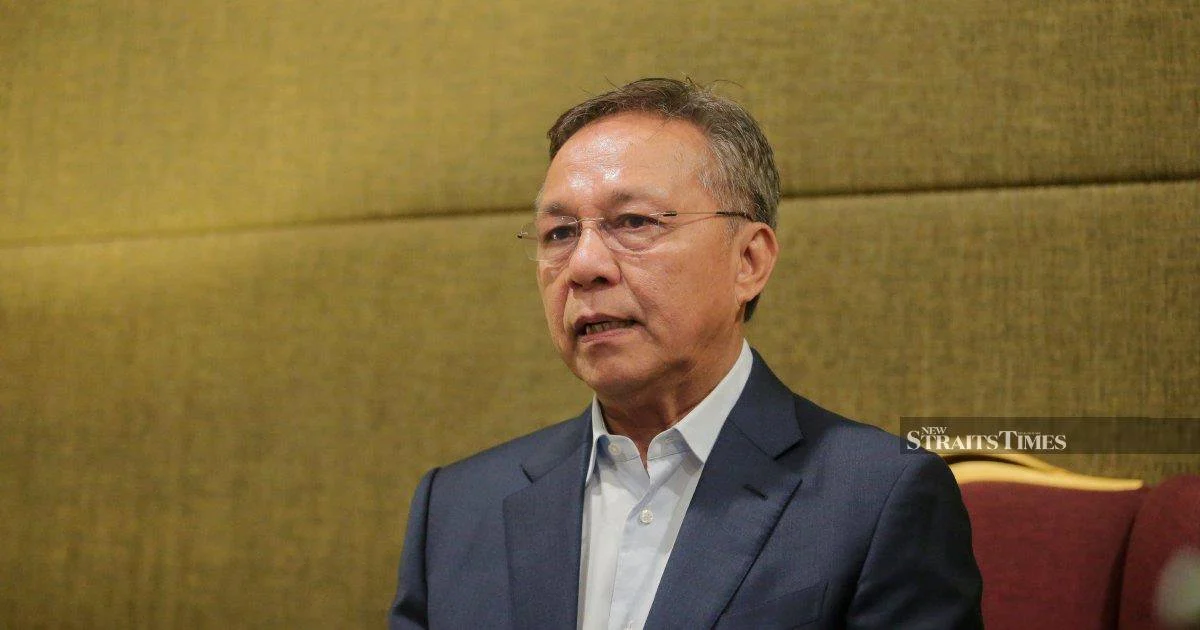
Datuk Seri Hasni Mohammad, who previously served as Johor's menteri besar, has been omitted from the Barisan Nasional candidate list for the forthcoming Johor state elections. The exclusion has triggered widespread speculation about his political future, with observers suggesting the move may clear the path for him to contest a parliamentary constituency in the next general election.
The decision to drop the veteran politician from the state-level slate represents a notable shift in the coalition's strategy for Johor, the nation's second-most populous state and a crucial political battleground. His removal from consideration raises questions about the internal dynamics within Barisan Nasional and how the coalition is reshuffling its roster of candidates across different electoral tiers.
Hasni Mohammad's political career has been marked by significant influence within Johor's UMNO structures and the wider Barisan Nasional framework. As a former menteri besar, he held one of the most prestigious positions in state politics, and his continued visibility in local political circles had made him a recognisable figure in Johor. However, the coalition's decision to exclude him from the state candidate list suggests a deliberate recalibration of leadership priorities.
Political analysts have noted that exclusion from state-level candidacies does not necessarily signal the end of a politician's electoral ambitions or relevance. In Malaysia's federal system, politicians often transition between state and federal constituencies, with some choosing to concentrate their efforts on parliamentary representation rather than remaining active in state assemblies. This pattern has become increasingly common as senior figures seek to consolidate their influence at the national level.
The speculation about Hasni Mohammad contesting a parliamentary seat reflects the complex calculations that shape Malaysian political contests. Federal constituencies offer a different political platform, with broader geographic reach and influence over national policy-making. For an experienced politician with Hasni's background, a parliamentary seat could represent a strategic pivot toward greater national prominence and legislative influence.
Johor's electoral landscape remains significant within Malaysia's political matrix. The state has consistently played a crucial role in determining federal government outcomes, and its candidate selections by major coalitions invariably draw scrutiny from political observers and party strategists nationwide. The composition of Barisan Nasional's slate for Johor state elections therefore carries implications beyond purely local considerations.
Barisan Nasional's candidate selection process reflects the coalition's broader strategic thinking about resource allocation and political positioning in the lead-up to both state and national elections. The decision to exclude Hasni from the state candidates suggests the coalition may be focusing on different personalities and potentially new faces for the state assembly tier, whilst potentially reserving him for federal parliamentary contests where his seniority and experience might be leveraged more effectively.
For Malaysian political observers, particularly those monitoring Johor's developments, the exclusion represents an instructive example of how coalitions manage transitions among veteran politicians. Rather than a straightforward retirement or marginalisation, the move appears calculated to redirect Hasni's political capital toward the parliamentary level. This approach allows Barisan Nasional to maintain continuity with experienced figures whilst simultaneously refreshing state-level leadership.
The timing of the announcement also merits attention, as it comes against the backdrop of broader discussions about Malaysia's electoral calendar and the likely timing of the next general election. Political observers have suggested that the next parliamentary election could occur within the coming years, making this period particularly consequential for politicians positioning themselves for federal contests. Hasni Mohammad's exclusion from state-level candidacies may thus be understood as a preparatory move toward federal parliamentary campaigning.
Within Johor UMNO and broader Barisan Nasional circles, reactions to Hasni's removal from the state candidate list have varied. Some observers view it as a natural progression for a senior statesman transitioning toward federal politics, whilst others have speculated about potential internal party dynamics that may have influenced the decision. The opaque nature of coalition candidate selection processes in Malaysia typically ensures that precise motivations remain subject to interpretation and rumour.
For voters and constituencies in Johor, the exclusion raises questions about how the coalition plans to contest state seats previously held or contested by senior figures. The replacement of experienced politicians with newer candidates requires careful management to maintain electoral competitiveness, particularly in constituencies where the outgoing candidate enjoyed strong personal support among voters.
Looking ahead, Hasni Mohammad's political trajectory will likely become clearer once nomination deadlines approach for the next general election. If he indeed contests a parliamentary seat, his campaign may draw on decades of political experience and party service. Conversely, if he does not materialise as a candidate in federal elections, the decision to exclude him from state races may acquire different significance within analyses of Johor's political realignment.