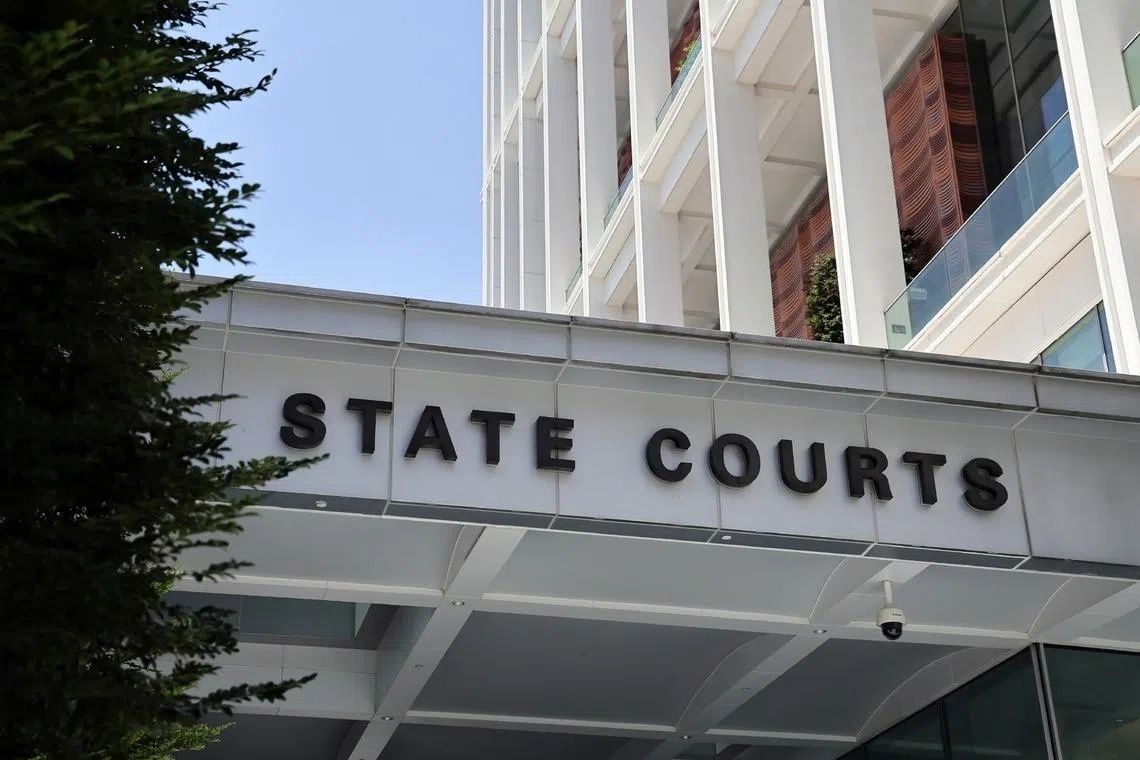
Singapore's courts processed drink-driving charges against 41 motorists on June 25, underscoring the persistent traffic safety challenge posed by alcohol-impaired driving across the city-state. Among the cases heard that day, three drivers drew particular attention for the severity of their alleged conduct: each man had reportedly fallen asleep while operating a vehicle despite carrying dangerous levels of alcohol in their systems, a circumstance that magnifies the risks inherent in driving while intoxicated.
Tho Yu Wei Ronald, aged 34, was accused of abandoning his car at the entrance of a multi-storey carpark located at Block 176 Hougang Street 13 late on the evening of April 30. Breath analysis indicated he carried at least 51 micrograms of alcohol per 100 millilitres of breath, substantially exceeding Singapore's legal threshold of 35 micrograms per 100 millilitres. The circumstances suggest he had become incapacitated while behind the wheel, losing consciousness and leaving his vehicle in a position that created obstruction and inconvenience for other road users.
Zhong Pengzhi, 38, presented a similarly alarming incident when his car was discovered abandoned in the second lane of Clementi Avenue 5 at approximately 1.40am on May 9. Testing revealed alcohol levels of 48 micrograms per 100 millilitres of breath. The early morning timing and location of his vehicle—positioned in a traffic lane rather than safely parked—heightened the danger posed to other motorists navigating that stretch of road during the overnight period when visibility and driver alertness are already compromised.
The third case involved Dharuman Killivalavan, a 29-year-old Indian national operating a commercial lorry along Loyang Avenue on the evening of June 15. His breath test showed 87 micrograms of alcohol per 100 millilitres, the highest concentration among the three, placing him dangerously intoxicated while controlling a heavy vehicle. Upon appearing in court, Dharuman entered a guilty plea and received a fine of $7,100 alongside a 36-month driving disqualification, suggesting the courts treated his case with considerable severity given the commercial nature of the vehicle and the magnified risk posed by an incapacitated heavy goods vehicle operator.
The broader pattern illustrated by the 41 simultaneous charges reveals institutional challenges in Singapore's approach to drink-driving enforcement and deterrence. Among those charged, two had prior convictions for the identical offence, indicating that existing penalties and licence suspensions had failed to prevent recidivism. Cheng Woon Siong, aged 44, represented one such repeat offender, having been previously convicted in December 2019. When stopped for routine police checks with 52 micrograms of alcohol per 100 millilitres of breath, he faced escalated consequences: a one-month custodial sentence, a $5,500 fine, and a 60-month driving disqualification extending five years beyond his prison release. This progression in penalties demonstrates the courts' intention to impose increasingly stringent consequences on habitual offenders.
Koh Choon Lye, the second repeat offender among the 41, was similarly stopped along Tyrwhitt Road in April, testing at 51 micrograms per 100 millilitres of breath. His earlier conviction for drink-driving in 2018 provided court precedent for more severe sentencing, signalling to the broader driving population that established offenders face compounded legal jeopardy. The inclusion of two recidivists among 41 charged in a single day highlights a troubling subset of drivers who persist in the behaviour despite prior judicial intervention and licence restrictions.
Statistical context underscores the scale of Singapore's drink-driving problem and its tragic consequences. The Traffic Police reported 1,716 arrests for drink-driving throughout 2025, averaging roughly 34 cases weekly across the entire jurisdiction. More starkly, 12 fatal accidents directly attributable to drink-driving occurred during the same period, each fatality representing not merely a statistic but an entire family's loss and broader societal impact. This mortality figure, though lower in absolute terms than many larger nations, remains deeply concerning given Singapore's relatively compact geography and sophisticated enforcement infrastructure.
The simultaneous processing of 41 cases appears designed as a public awareness intervention, amplifying the enforcement message through concentrated court activity. By channelling multiple offenders through the judicial system on a single day, authorities generated media visibility and public discourse around drink-driving consequences at a moment when such visibility carries maximum deterrent value. For Malaysian and other Southeast Asian readers, Singapore's approach—combining automated breath testing at checkpoints, relatively severe penalties including imprisonment, substantial fines, and extended licence suspensions—offers a model of enforcement that contrasts sharply with enforcement patterns in some neighbouring jurisdictions.
The police statement accompanying these charges reiterated the fundamental safety message: driving under alcohol's influence represents conduct that is simultaneously dangerous and fundamentally irresponsible. The emphasis on alternative transport options—taxis and private-hire vehicles—acknowledges the reality that social drinking remains culturally normative across Singapore and the region, making the choice between driving and using alternative transport a practical daily decision for many motorists. The official guidance targets the decision-making moment when individuals contemplate consuming alcohol while planning to operate vehicles, attempting to shift behaviour before driving occurs.
For Singapore's densely populated urban environment with heavy traffic flow and vulnerable road users, the consequences of impaired driving extend beyond the individual driver and passenger. Accidents involving drink-impaired operators create cascading disruptions affecting public safety, emergency response resources, and innocent third parties. The prevalence of commercial vehicle operators among recent charges—including the lorry driver case—amplifies concerns about goods movement and public transport reliability when alcohol-impaired commercial drivers create accidents and service disruptions.
The data from 2025 and the concentrated June 25 court processing confirm that Singapore's Traffic Police maintain robust enforcement activity and that judicial responses remain proportionate to the established risk levels. The escalating penalties for repeat offenders signal judicial determination to suppress recidivism through increasingly stringent consequences. However, the continued volume of arrests and the persistent mortality figures suggest that deterrence remains incomplete, and that voluntary behaviour change among a subset of drivers has not achieved the safety outcomes authorities target.