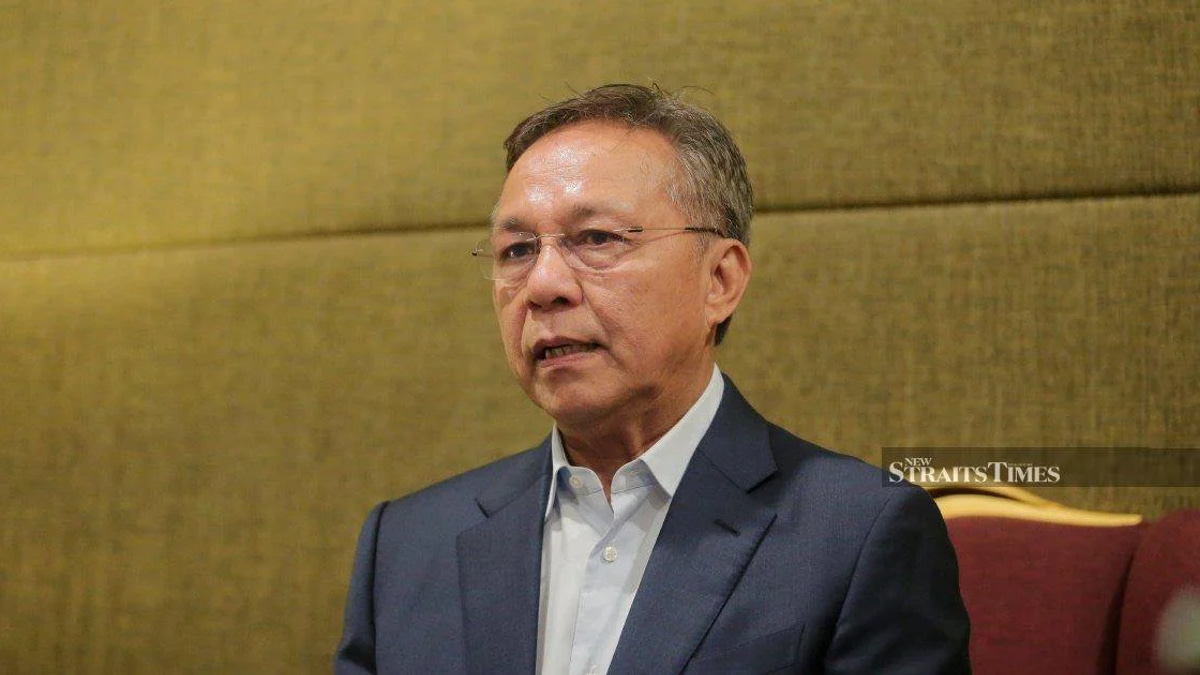
Datuk Dr Mohd Puad Zarkashi, a Supreme Council member of UMNO, announced his resignation from the party on June 25, 2026, citing fundamental disagreements over party direction and what he characterises as a lack of independent leadership within the organisation's Johor branch. The move marks a significant break from within the coalition's ranks at a sensitive moment in the political calendar, as the party prepares for forthcoming state elections in the traditionally crucial southern state.
In a Facebook statement released on the day of his departure, Puad emphasised that his decision came of his own volition, without pressure or inducement from external parties. He stressed that the resignation would liberate him from internal party constraints that had previously limited his ability to voice concerns and engage in constructive criticism. The Rengit state assemblyman's public departure differs markedly from the quieter exits common in Malaysian politics, suggesting a deliberate effort to create a platform for his grievances and shape the narrative surrounding his decision.
At the heart of Puad's critique lies an accusation that Johor UMNO has become directionless under current leadership, operating as what he calls a "tethered puppet" controlled by external forces rather than exercising genuine political agency. He characterises the state party's top leadership, particularly Johor Menteri Besar Onn Hafiz, as a "pak turut" or yes-man, suggesting that key decisions are made elsewhere and merely implemented by the state administration. This framing implies that Johor's political leadership lacks the autonomy to champion the state's interests or pursue policies aligned with party grassroots sentiment.
The ex-Batu Pahat Member of Parliament frames his departure as an act of "political courage" designed to expose what he perceives as systemic irregularities before they deepen. His characterisation of the move as preventive rather than reactive suggests he views current trajectories as unsustainable, and that speaking out now serves the party's long-term interests. This positioning allows him to present himself as a concerned veteran attempting to course-correct rather than a disgruntled faction player seeking leverage.
Puad's grievances crystallised around candidate selection processes for the upcoming Johor state elections. On June 24, he had hinted at an important announcement after flagging irregularities in Barisan Nasional's candidate nomination procedures. These allegations carry weight given his extensive background within party structures and his familiarity with established selection protocols. His earlier decision not to defend his own Rengit seat, despite winning it in the 2022 state election, had positioned him as someone willing to step aside for younger candidates—a stance that now appears more complicated by his simultaneous critique of how selections have actually unfolded.
The timing of Puad's departure, weeks before state elections, carries strategic implications for UMNO's cohesion and electoral prospects in Johor. His decision to depart rather than remain and fight internally suggests either that he sees reform as impossible from within, or that he believes greater impact comes from outside the party structure. For UMNO, his exit removes a voice with significant institutional memory and federal-level experience, while simultaneously amplifying criticism of current state management at a crucial election period.
Puad's political trajectory reveals someone accustomed to influence and prominence. He served as Deputy Education Minister from 2009 to 2013 and directed JASA, the Special Affairs Department, from March 2015 to April 2018, providing him with insights into both ministerial operations and government communications machinery. His previous parliamentary representation of Batu Pahat, where he defeated PAS candidate Muhammad Abdullah with a majority of 12,968 votes in the 12th General Election, and his subsequent stint as Johor State Legislative Assembly Speaker, position him as an experienced party operator with deep connections across the coalition.
Yet his later electoral struggles complicate the narrative of a declining political fortunes motivating his departure. In the 13th General Election, he lost the Batu Pahat parliamentary seat to PKR candidate Datuk Mohd Idris Jusi by a narrow 1,524-vote margin, suggesting vulnerabilities that may have contributed to his current situation. His decision not to contest the Rengit state seat this cycle could reflect genuine generational concerns or strategic calculation about diminishing electoral viability—factors that likely intersect with his current criticisms.
For Malaysian political observers, Puad's resignation exemplifies pressures within UMNO as the coalition navigates internal reform, succession planning, and the integration of competing factions at state level. His accusations regarding leadership autonomy hint at broader questions about power distribution within Johor's governance structures and whether the state party maintains genuine policymaking authority or operates as an administrative appendage of federal interests. These tensions become particularly acute in Johor, historically UMNO's stronghold, where governance legitimacy depends on demonstrating responsiveness to local priorities.
The implications extend beyond internal party management. Public departures accompanied by serious allegations of governance dysfunction can erode voter confidence and embolden opposition parties seeking to portray the ruling coalition as factionalised and dysfunctional. Opposition parties will likely weaponise Puad's criticisms in election campaigns, using his insider status to validate claims about poor governance or internal rot. UMNO's response—whether through rebuttal, silence, or internal investigation—will shape perceptions of institutional health and leadership credibility heading into elections.
Puad's explicit rejection of suggestions that personal interests drive his decision reflects awareness of how departures are typically interpreted in Malaysian politics. Yet the timing, combined with his earlier electoral setbacks and decisions about seat contests, invites scrutiny about multiple motivations operating simultaneously. His emphasis on "political courage" may serve partly to rehabilitate his image as a principled actor making difficult choices rather than simply exiting a situation no longer serving his ambitions.
Looking ahead, observers will watch whether Puad's criticisms resonate within UMNO's grassroots, precipitating further departures or internal challenges to current leadership, or whether his departure becomes a contained incident treated as an outlier. His subsequent political moves—whether joining another party, remaining independent, or working to reform UMNO from outside—will clarify his intentions and the seriousness of his allegations. For UMNO in Johor, the immediate challenge involves demonstrating responsive, autonomous leadership capable of winning the upcoming state election while addressing the substantive concerns he has raised about governance and candidate selection integrity.