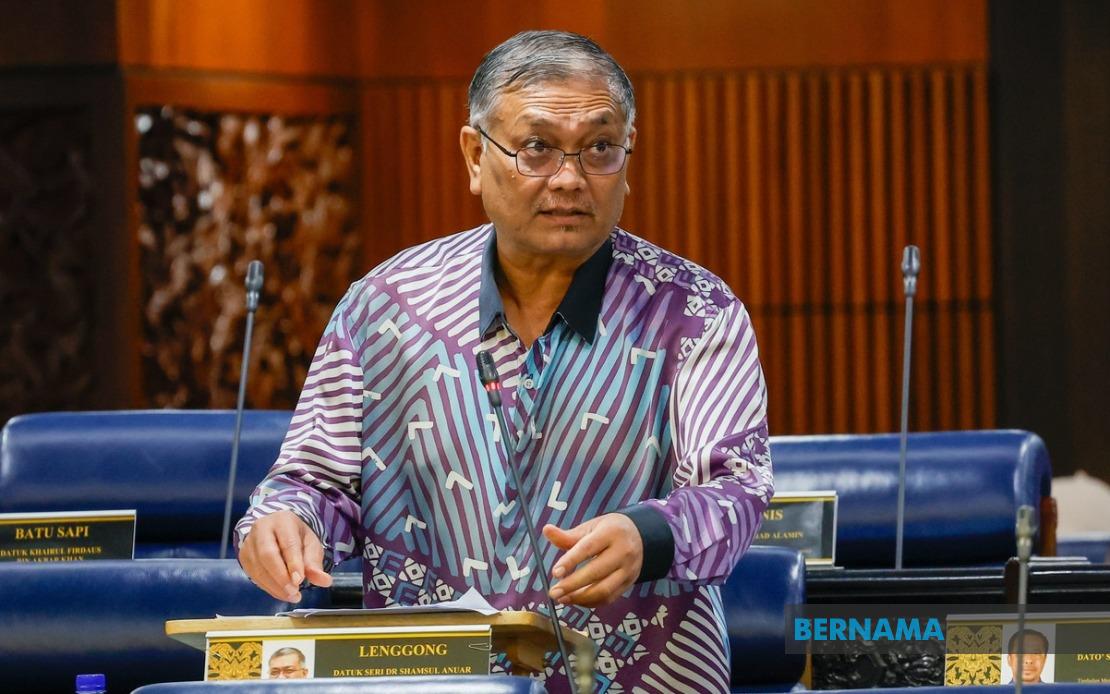
The Malaysian government has stepped back from advancing the Prisons (Amendment) Bill 2026 in Parliament, returning it to specialist committees for additional examination following heated debate among lawmakers. Deputy Home Minister Datuk Seri Dr Shamsul Anuar Nasarah announced the deferment on June 25, confirming that the legislation will be referred to both the Parliamentary Special Select Committee on Security and the Parliamentary Special Select Committee on Human Rights, Election and Institutional Reform for renewed scrutiny before any further parliamentary proceedings.
The bill represents a significant effort by the Home Ministry to reshape Malaysia's prison system through modernisation and reformed rehabilitation approaches. Among its core proposals are provisions enabling the deployment of electronic monitoring devices to track inmates and a framework allowing trained volunteers to participate directly in prisoner rehabilitation initiatives under the Prisons Act 1995. These measures form part of a broader strategy to alleviate the chronic overcrowding afflicting Malaysian prisons, which has been a longstanding challenge for prison administration and human rights advocates alike.
Shamsul Anuar acknowledged that the ministry had carefully noted all concerns raised during parliamentary debate, indicating a willingness to address substantive objections before reintroduction. He revealed that prior to tabling the bill in the Dewan Rakyat, extensive consultative groundwork had already been conducted. The Human Rights, Election and Institutional Reform committee had reviewed the proposals in late October 2025, followed by the Security committee in mid-June, with both bodies initially responding favourably to the amendments in principle. Separate briefing sessions for Members of Parliament were also held to solicit their input on the proposed legislative changes.
The crux of parliamentary opposition centred on a controversial new Section 63A embedded within the bill's 12 clauses. This provision would grant legal immunity to prison officers and individuals acting under orders from the commissioner general, effectively creating a shield against potential liability for actions taken in an official capacity. The scope of this protection troubled numerous parliamentarians across party lines, suggesting concerns transcended traditional government-opposition divisions on the issue.
William Leong Jee Keen, the Selayang MP from the Pakatan Harapan coalition, articulated perhaps the most coherent objection, arguing that any legal safeguards for officers must remain subordinate to principles of accountability and adherence to the rule of law. His position reflected anxieties that blanket immunity could undermine judicial oversight and create conditions for potential abuse without meaningful recourse for affected parties. This concern resonates particularly in Malaysia's context, where civil society organisations have periodically raised alarms about prison conditions and the treatment of detainees.
Several other opposition and independent MPs amplified similar critiques, including Datuk Awang Hashim representing Pendang under Perikatan Nasional, PH's Ramkarpal Singh from Bukit Gelugor, Datuk Seri Madius Tangau of Gabungan Rakyat Sabah from Tuaran, and RSN Rayer from PH-held Jelutong. The breadth of this coalition against the immunity clause indicated genuine substantive concern rather than mere partisan theatre, suggesting the government recognises legitimate questions about whether the legal framework adequately balances operational flexibility for prison management with constitutional protections against arbitrary action.
The volunteer component of the bill, while less contentious, introduces its own complexities within the Malaysian prison ecosystem. Incorporating non-professional volunteers into rehabilitation programming represents an evolution in how Malaysia conceptualises prisoner reintegration, moving toward community-based models increasingly adopted elsewhere. However, questions about volunteer training standards, liability when volunteers interact with inmates, and oversight mechanisms would naturally require careful articulation to prevent complications.
Electronic monitoring technology constitutes another significant modernisation element. Malaysian authorities have deployed such systems in limited contexts previously, but systematic implementation across the prison network would require substantial infrastructure investment, staff training, and robust data protection protocols. For a nation increasingly focused on digital transformation and technological governance solutions, such innovation aligns with broader policy directions, though implementation details demand careful calibration.
The deferment represents a measured approach by the government, acknowledging parliamentary concerns without abandoning the legislative agenda entirely. By returning the bill to specialist committees rather than shelving it indefinitely, the Home Ministry signals commitment to addressing legitimate oversight concerns while preserving momentum for prison system reform. This procedural pathway also allows detailed technical examination of the immunity provisions and volunteer frameworks outside the full parliament's glare, potentially enabling compromise language that satisfies both administrative efficiency and accountability advocates.
For Malaysian stakeholders, particularly civil society organisations monitoring detention conditions and criminal justice reform advocates, the deferment provides an opportunity to engage substantively with committees on mechanisms ensuring accountability in prison operations. The decision reflects evolving parliamentary culture in Malaysia, where specialist committees increasingly function as genuine deliberative bodies rather than rubber-stamp mechanisms. This trend toward more rigorous legislative scrutiny, even for government-sponsored measures, may strengthen the eventual legislation by forcing administrators to justify provisions more thoroughly.
The broader context involves Malaysia's commitment to international human rights standards alongside pragmatic recognition that prison administration requires operational discretion. The bill's eventual passage will likely depend on whether revised language can accommodate legitimate accountability concerns without rendering prison management impractical. This delicate balance—protecting both institutional function and individual rights—represents precisely the kind of nuanced legislative challenge that specialist parliamentary committees are designed to address.