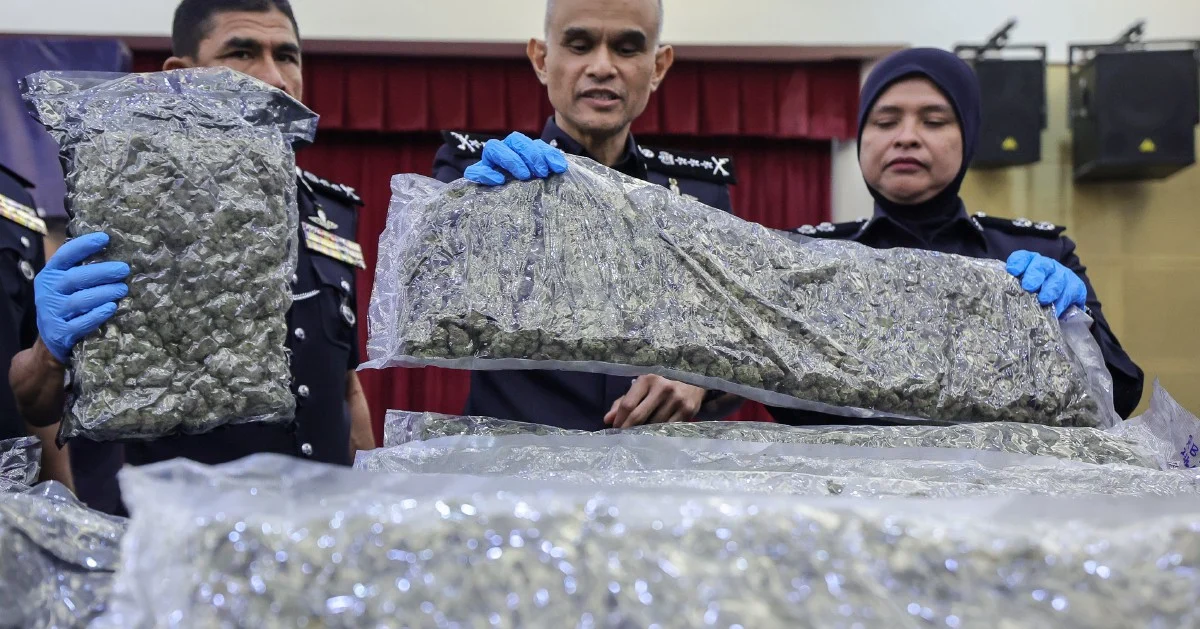
Police in the Klang Valley have made significant progress in combating drug trafficking networks operating through Malaysia's main international gateway, intercepting more than 650 kilograms of cannabis buds at Kuala Lumpur International Airport since the start of 2024 and detaining 38 individuals suspected of involvement in large-scale drug distribution.
The scale of the seizure underscores the vulnerability of KLIA to drug smuggling attempts and highlights the persistence of organised networks attempting to route narcotics through Southeast Asia's largest aviation hub. The confiscation represents one of the largest single-location cannabis interdictions at the airport in recent years, suggesting either an uptick in smuggling activity or improved detection capabilities by law enforcement authorities deployed at the facility.
Among those arrested are both Malaysian nationals and foreign citizens, indicating that the criminal operation involved cross-border coordination and international trafficking patterns. The inclusion of foreign suspects points to the transnational nature of contemporary drug networks, which often exploit lax regulatory environments in transit countries and leverage international travel networks to distribute contraband across regional markets. The diversity of arrested individuals suggests a hierarchical organisation with specialised roles spanning procurement, packaging, transportation, and distribution.
The cannabis interceptions at KLIA represent part of a broader enforcement challenge facing Malaysian authorities. The country sits in a strategic geographic position between major drug-producing regions in Southeast Asia and lucrative consumer markets in East Asia and the Middle East, making it an attractive transit hub for smugglers. Airports, particularly international ones handling millions of passengers annually, present enforcement challenges due to the volume of luggage and cargo processed daily, even with advanced screening equipment and trained personnel.
Law enforcement agencies have progressively enhanced detection methods at KLIA, including deployment of drug-sniffing dogs, advanced X-ray scanning technology, and intelligence-led operations targeting suspected smugglers. The recent seizures suggest these investments are yielding results, though the continued volume of contraband reaching the airport indicates that smugglers remain undeterred and continue adapting their tactics to evade detection.
The arrest of 38 individuals provides intelligence opportunities that could lead to further dismantling of trafficking networks. Malaysian authorities typically use detained suspects to map criminal organisations, identify supply sources, trace distribution channels, and identify potential end-users or buyers. Information obtained through interrogations often proves valuable in preventing future smuggling attempts and identifying previously unknown members of organised crime syndicates.
Cannabis, while illegal under Malaysia's strict Dangerous Drugs Act, has become an increasingly common smuggling commodity as regional demand grows, particularly among younger demographics and in urban centres. The market dynamics differ from heroin or methamphetamine, with cannabis commanding lower prices per kilogram but finding demand across diverse socioeconomic strata. The 650-kilogram haul, if distributed at street level, could potentially serve thousands of users and generate substantial revenue for criminal organisations.
The operation reflects evolving enforcement priorities within Malaysia's law enforcement agencies, which have traditionally focused resources on heroin and methamphetamine trafficking due to their association with addiction and overdose deaths. However, growing cannabis seizures across the region have prompted reallocation of resources toward cannabis interdiction, partly in response to international pressure and partly due to recognition of expanding domestic consumption patterns.
Regional intelligence sharing mechanisms, particularly through frameworks like the ASEAN Narcotics Cooperation Centre and bilateral arrangements with Thai, Indonesian, and Singaporean authorities, likely contributed to identifying the networks targeted in these operations. Cross-border cooperation has become essential as trafficking organisations exploit territorial boundaries and jurisdictional limitations to move drugs across the region.
The KLIA seizures carry significant implications for Malaysia's drug control policies and border security infrastructure. Success in intercepting such large quantities demonstrates operational capacity but simultaneously reveals the ongoing vulnerability of the country's air gateway to sophisticated smuggling attempts. Sustained interdiction requires continued investment in personnel training, technology modernisation, and intelligence analysis capabilities.
For Malaysian businesses and travellers, such operations underscore the government's commitment to border security, though they also highlight risks associated with airport congestion and potential delays during peak periods when enhanced screening occurs. The arrests demonstrate that authorities maintain vigilance despite the logistical challenges inherent in processing international air traffic.
The investigation into the arrested individuals remains ongoing, with authorities likely pursuing additional charges and seeking to identify remaining members of the trafficking network. Successful prosecution of the 38 suspects will depend on quality of evidence gathering and the robustness of Malaysian court proceedings in drug trafficking cases, which typically result in lengthy prison sentences under national legislation.