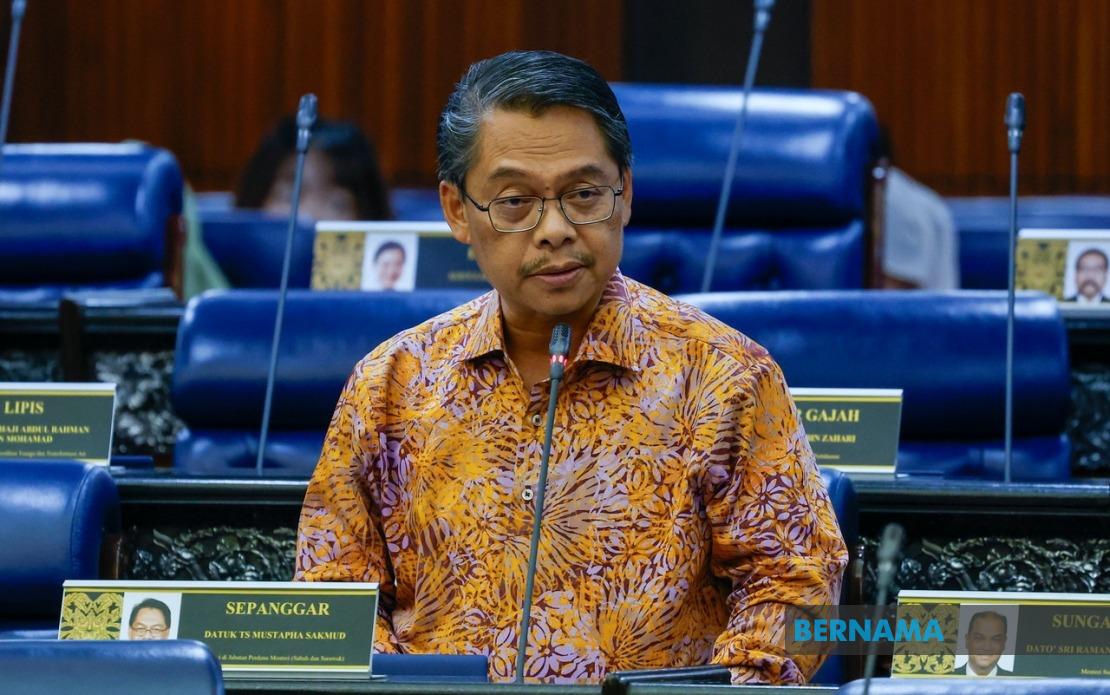
Efforts to resolve long-standing constitutional and administrative issues arising from the Malaysia Agreement 1963 have yielded measured progress, with negotiations through an official federal platform producing thirteen fully resolved matters out of twenty-nine under discussion. Minister in the Prime Minister's Department (Sabah and Sarawak Affairs) Datuk Mustapha Sakmud disclosed this update during parliamentary proceedings, indicating that the decades-old framework governing Sabah and Sarawak's incorporation into Malaysia continues to generate items requiring clarification and adjustment.
In addition to the thirteen completed resolutions, five further issues have reached what officials describe as interim or partial settlement status. This classification reflects a transitional state where consensus has been broadly achieved but implementation details or final ratification remains pending. The breakthrough came following deliberations at a March 2 Technical Committee gathering, demonstrating that despite the complexity and sensitivity surrounding MA63 discussions, the negotiating mechanisms remain functional and capable of producing outcomes.
Four of the five interim matters centre on civil service expansion within Sabah and Sarawak's public sectors, specifically under Article 112 of the Federal Constitution. These negotiations address how state governments might grow their administrative workforce while managing relationships with the federal apparatus. Alongside this civil service question, delegations have also engaged substantively on health policy coordination, educational standards and resource allocation, and what officials term the "Borneonisation" of federal public service staffing—essentially the preference for recruiting federal civil servants from Sabah and Sarawak's resident populations rather than transferring personnel from peninsular Malaysia.
The Borneonisation concept touches on a nerve in East Malaysian politics, as local communities have historically felt marginalised when federal positions went to outsiders. Ensuring that federal services operating within the two states employ people with local knowledge and connections addresses a longstanding grievance and supports economic participation among Sabah and Sarawak residents. These interim agreements signal federal willingness to consider such adjustments, though their full operationalisation depends on bureaucratic restructuring and political commitment at multiple governance levels.
Eleven matters from the original slate of twenty-nine remain unresolved and are under active monitoring by the Sabah and Sarawak Affairs Division, which functions as secretariat to the negotiating process. Officials stress that both federal and state government stakeholders remain engaged with these outstanding items, suggesting intention to pursue further progress. The extended timeline reflects the entrenched nature of some disagreements and the need for consensus-building across different political actors and constituencies.
Among the most contentious unresolved issues is the question of parliamentary representation for Sabah and Sarawak. A parliament member from Warisan party (representing Kota Belud constituency) pressed the government on achieving what supporters describe as a fair quota—specifically, increasing the number of parliamentary seats held by the two East Malaysian states to constitute thirty-five percent of the Dewan Rakyat. This demand reflects arguments that Sabah and Sarawak, as equal partners in the original federation, deserve proportional representation reflecting their combined population share.
However, Mustapha's response indicated that the parliamentary seats question remains contentious and unresolved, with negotiations continuing but no breakthrough imminent. Any adjustment to electoral boundaries requires the Election Commission to undertake a redistricting exercise, a process that can only occur following the completion of an eight-year cycle from the previous round. Malaysia's electoral landscape has legal guardrails that prevent frequent boundary adjustments, creating structural constraints on how quickly changes can be implemented even when political will exists.
Beyond the Election Commission's role lies a more fundamental obstacle: constitutional amendment. Altering the composition of the Dewan Rakyat falls under Article 46 of the Federal Constitution and demands a two-thirds supermajority approval from parliament. This threshold represents a high bar for change, effectively granting significant power to any coalition holding one-third plus one of parliamentary seats to block amendments. The combination of these procedural requirements means that even if federal and state governments agreed on a parliamentary seats increase, translating that agreement into constitutional reality would demand either overwhelming parliamentary consensus or a period of unified single-party dominance—conditions that Malaysia's contemporary fractionalised political landscape makes unlikely.
The underlying tension between Sabah and Sarawak's sense of being marginalised and the structural difficulty of constitutional amendment reflects a broader dynamic in Malaysian federalism. The MA63 framework was conceived as a compact between equal partners, yet the decades since 1963 have seen incremental centralisation of power in Kuala Lumpur. East Malaysian states have sought to rebalance this arrangement through renegotiation, but success depends on accumulating federal goodwill and parliamentary arithmetic that remains elusive.
The interim resolutions on civil service and Borneonisation, while modest in scope, do suggest that incremental progress remains possible where issues do not directly threaten the peninsula's political dominance. Civil service staffing and public sector expansion can proceed through administrative discretion and budgetary allocation, requiring no constitutional amendment. Educational and health coordination similarly involves policy cooperation rather than constitutional recalibration. By contrast, the parliamentary seats question directly redistributes political power and therefore faces structural resistance.
For Malaysian observers and particularly those in Sabah and Sarawak, the unfolding MA63 negotiations illustrate both the potential and the limits of formal renegotiation mechanisms. When disputes concern bureaucratic organisation and service delivery, progress materialises. When they touch the distribution of legislative power, constitutional bedrock prevents movement. Moving forward likely requires East Malaysian political actors to either accumulate greater federal leverage through coalition politics or to accept that certain reforms will require generational shifts in parliamentary balance. The current trajectory—thirteen resolved, five interim, eleven outstanding—suggests a long negotiation horizon remains.