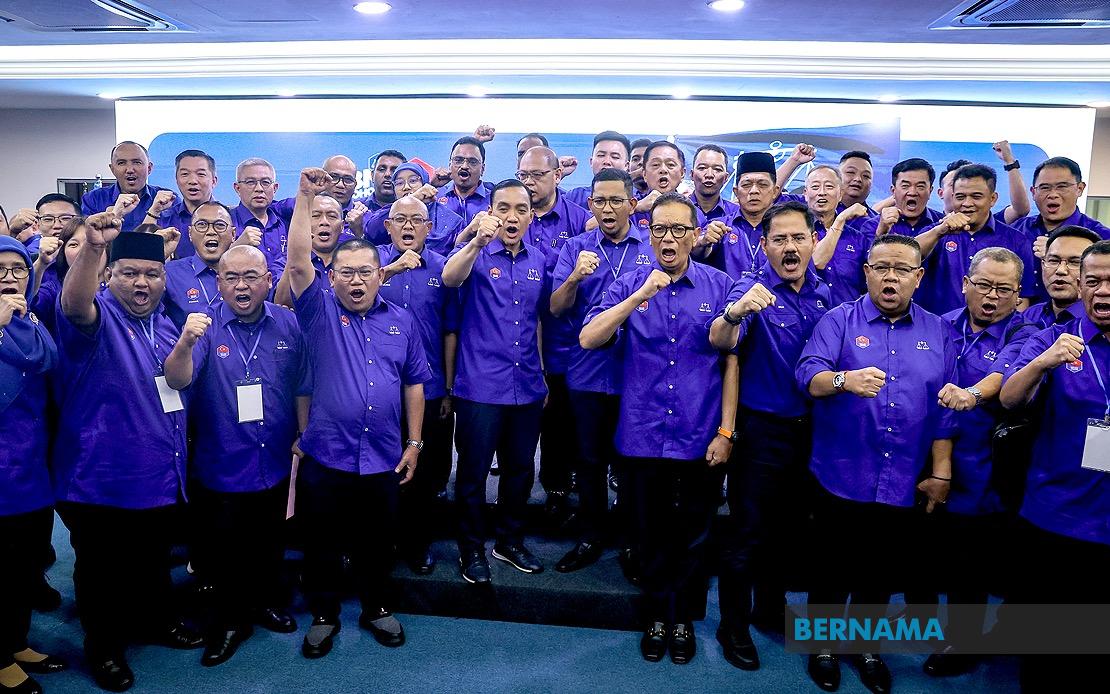
The Johor Barisan Nasional coalition has formally presented its candidate roster for the 16th state election, deploying a mix of seasoned political operators and emerging figures to contest across all 56 legislative seats. The announcement, delivered by Johor BN chairman Datuk Onn Hafiz Ghazi at a ceremony in Johor Bahru, represents a carefully calibrated strategy aimed at maintaining the coalition's grip on the state, where it has governed continuously since independence. The lineup comprises 37 UMNO representatives, 15 from the Malaysian Chinese Association (MCA), and four from the Malaysian Indian Congress (MIC), reflecting the traditional power-sharing arrangement within the Barisan framework.
The selection process carried the explicit endorsement of BN's national chairman Datuk Seri Dr Ahmad Zahid Hamidi, underscoring the alignment between federal and state party leadership. This approval mechanism reveals the hierarchical nature of candidate determination within the coalition, where state-level autonomy remains circumscribed by national party protocols. For Johor specifically, the decision-making reflects broader calculations about which constituencies require defending, where ground-level party strength permits competitive fielding, and which seats represent genuine battlegrounds in an increasingly competitive political environment. The timing of the announcement, ahead of what is likely to be a closely contested election cycle, allows BN machinery adequate preparation time for ground mobilisation across diverse demographic and geographic constituencies.
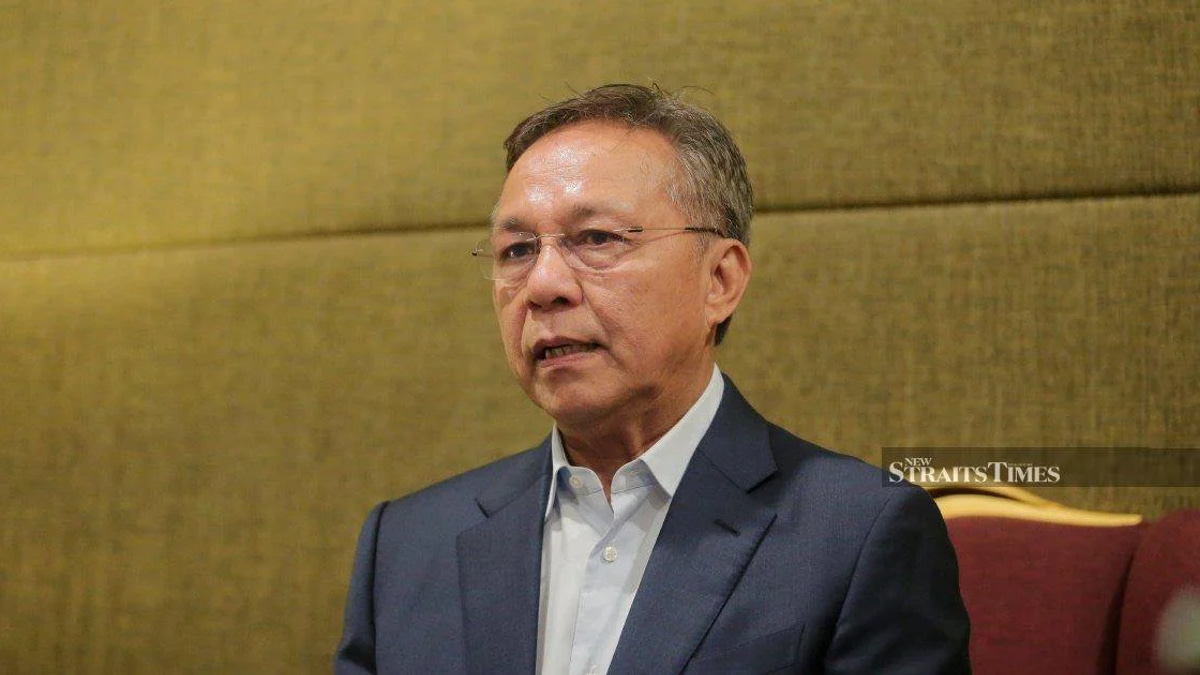
Among the most significant confirmations is the reinstatement of Datuk Seri Dr Adham Baba as the Pasir Raja candidate, marking a strategic return for the former health minister and Tenggara UMNO division chief. Adham's trajectory illustrates the ebb and flow of individual political fortunes within a rigid party structure. He previously held the Pasir Raja state seat for two consecutive terms spanning 2008 to 2018, then transitioned to federal politics where he represented Tenggara for two terms across 2004-2008 and 2018-2022. His redeployment to the state arena signals either confidence in his local constituency appeal or perhaps reflects recent federal political realignments that have freed him for state-level competition. The decision to re-contest Pasir Raja carries implications for how UMNO manages its bench of experienced but temporarily sidelined figures, particularly those with previous ministerial experience.
Menteri Besar Datuk Onn Hafiz Ghazi will defend the Machap state seat he secured during the 2022 state election, positioning him once again as the coalition's chief ministerial face in the contest. Onn Hafiz's continuation as a candidate for the post of Menteri Besar indicates party confidence in his leadership record and acceptability across Johor's diverse communities. The decision to anchor the Menteri Besar candidacy in Machap rather than shifting to a potentially stronger or more strategic seat demonstrates the importance BN places on personal incumbency advantages and the need to present stable, proven leadership to voters fatigued by political volatility.
A notable casualty of the renomination process is Datuk Seri Hasni Mohammad, the former Menteri Besar and sitting assemblyman for Benut. Despite his considerable seniority and previous ministerial status, Hasni has been set aside in favour of UMNO working secretary Datuk Mohd Sumali Reduan. This development underscores how even high-ranking political figures operate at the sufferance of party hierarchies and how electoral cycles create natural churn even at the most senior levels. Hasni's non-selection may reflect various factors: declining local support, desire to refresh the party's presentation, or calculated decisions about where to deploy limited high-profile candidacies most effectively. His removal from the Benut contest signifies that even former chief executives cannot assume automatic re-nomination, a reality that concentrates minds among ambitious politicians about maintaining constituent relationships and party performance metrics.
The candidate list demonstrates substantial continuity regarding experienced legislators. Nine of ten former Johor executive councillors who contested the 2022 state election have retained their nominations, indicating that the party values proven executive-level experience and institutional memory within government. The single exception is Khairin-Nisa Ismail @ Md On, formerly the State Women, Family and Community Development Committee chairman, who was not reselected to defend the Serom seat. This retention rate of 90 percent among former exco members reflects generally satisfactory party performance in 2022 and suggests limited appetite for wholesale generational replacement, at least among the senior decision-making echelon. The stability in nominations among experienced figures contrasts with the introduction of new candidates in other constituencies, suggesting a balanced approach to renewal.
Onn Hafiz used the nomination ceremony to articulate the ideological framing through which BN intends to campaign. He characterised nomination itself not as reward or privilege accruing to favoured individuals, but rather as a responsibility laden with trust and accountability to constituents. This rhetorical positioning attempts to reset expectations about what political service entails and implicitly critiques opposition narratives portraying BN as entitled or disconnected from voter concerns. His directive that candidates conduct campaigns with courtesy, respect, and prudence, aligned with Johor's presumed values, signals an intention to elevate the tone of the electoral contest and position BN as the coalition of responsible governance. Whether such messaging resonates against opposition platforms depends heavily on execution during the campaign and the broader political climate during the election period.
The composition of the BN slate across ethnic community representation through the three-coalition structure maintains the established architecture of Barisan Nasional. UMNO's dominance with 37 seats reflects its historical position as the coalition's largest component and its traditional base among Malay-Muslim voters, who constitute Johor's demographic majority. MCA's 15 nominations target constituencies with significant Chinese populations, particularly in urban areas and towns, while MIC's four candidates address constituencies with meaningful Indian community concentrations. This proportional allocation echoes federal-level power-sharing arrangements and signals to each community that their representation within BN operates through designated component parties rather than unified competition. The structure simultaneously constrains intra-coalition competition and guarantees each partner minimum legislative representation.
For Malaysian readers and Southeast Asian observers, the Johor election carries weight beyond state-level politics. As the economically significant and geographically strategic state closest to Singapore, Johor's governance quality and political stability influence regional confidence in Malaysian institutions. The coalition's nomination decisions reveal how established political structures adapt to changing voter expectations and competitive pressures. The choice to retain experienced figures while introducing selected new candidates suggests party strategists believe experience and continuity matter to Johor voters, particularly in a state where development outcomes and administrative efficiency carry tangible daily importance. The election will test whether this experience-focused strategy resonates or whether voters demand greater generational change than BN's nomination process reflects.