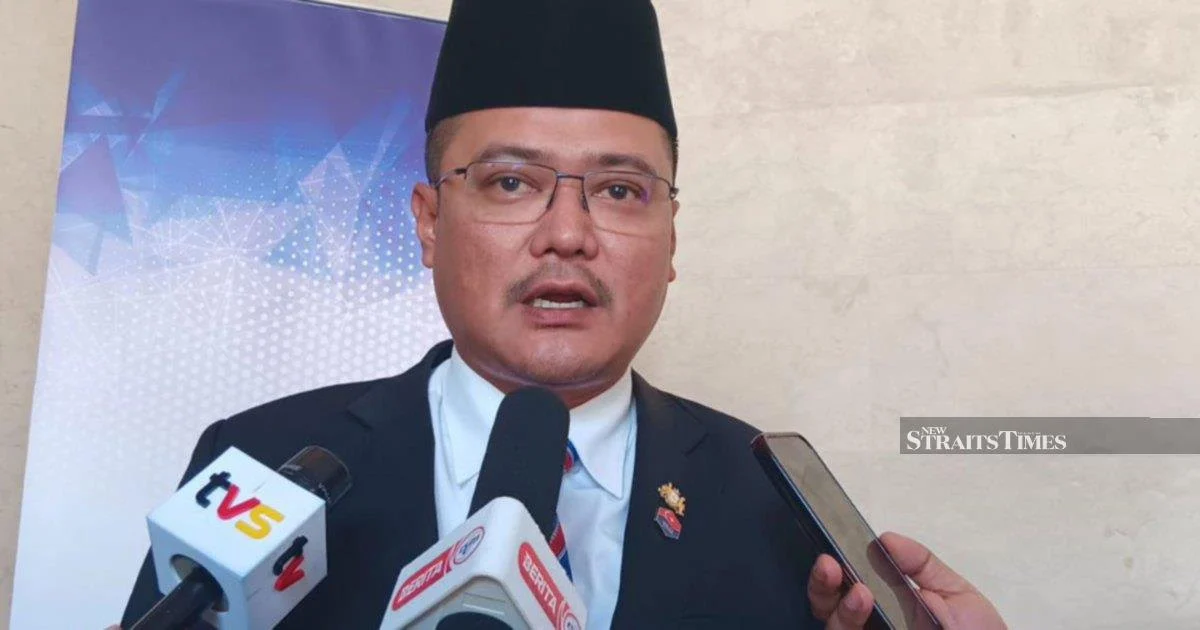
The political temperature in Johor has risen sharply following accusations levelled by Datuk Dr Mohd Puad Zarkashi, the former speaker of the state legislative assembly, with Johor's Barisan Nasional leadership moving quickly to dismiss his claims as unfounded and damaging to institutional credibility. The coalition's state chapter issued a strongly worded statement characterising Puad's allegations as baseless, serious and irresponsible, signalling an effort to contain what has become an increasingly fractious internal dispute within peninsular Malaysian politics.
Puad's specific allegations have touched on a sensitive area—the role of the palace in state political affairs—bringing constitutional matters and the traditional role of the monarchy into public debate. By linking the Johor royal institution to political decision-making processes, his assertions have struck at the heart of how state governance is perceived and understood, raising questions about the separation between royal prerogative and executive authority. The Barisan Nasional's pushback appears designed not merely to defend individual politicians but to protect the broader institutional framework that supports the hereditary monarchy's role in Malaysian governance.
The escalation has drawn intervention from Umno Youth, the youth wing of the United Malays National Organisation, which claims that hundreds of party members and supporters have lodged police reports in response to Puad's allegations. This mobilisation reflects the broader factional dynamics within Umno itself, where competing leadership interests and ideological orientations continue to shape party politics. The filing of these reports suggests an attempt to build a grassroots momentum against the former speaker's claims, converting what might otherwise remain an internal party matter into a formal law enforcement concern.
Though specific details of Puad's allegations remain contested, the controversy appears rooted in disagreements over how political appointments and decisions have been made within Johor's state administration. The involvement of palace institutions in these disputes underscores the complexity of Malaysian constitutional practice, where the sovereign plays roles that extend beyond ceremonial functions into areas touching on executive governance. This intersection has long been a point of constitutional tension in Malaysian politics, though it typically remains negotiated behind closed doors rather than aired in public controversy.
For Malaysian observers and political analysts, the Johor situation offers insight into how internal coalition tensions can spill into public disputes with institutional implications. The Barisan Nasional, despite its decades of electoral dominance in many states, remains vulnerable to internal cohesion challenges, particularly when allegations involve respected former office-holders like Puad. His prior position as speaker lent him credibility within legislative circles, making his allegations difficult for party leadership to simply dismiss as partisan grumbling or factional score-settling.
The police report strategy employed by Umno Youth represents a common tactic in Malaysian politics whereby political disputes are reframed as legal or criminal matters requiring state intervention. By encouraging supporters to file reports, the youth wing transforms what could be characterised as a private political disagreement into something with potential law enforcement dimensions. Whether such reports will result in formal investigations remains unclear, but their filing itself serves important political signalling purposes within Umno's internal power structures.
Regional implications extend beyond Johor's borders, as the state remains one of the most politically significant in Malaysia's peninsular region. Johor's governance stability directly affects economic investor confidence in the southern corridor, while its political composition influences broader peninsular Malaysian dynamics. Any prolonged instability or deepening factional conflict could reverberate through regional calculations involving neighbouring Selangor and Negeri Sembilan, where coalition politics continue to evolve following recent electoral cycles.
The timing of these allegations and the response also occurs within a broader context of shifting Malaysian political alignments following recent electoral developments and leadership transitions. The Barisan Nasional has been recalibrating its positioning relative to other coalitions, and internal disputes such as this one test the coalition's capacity to maintain disciplinary coherence while managing diverse factional interests. Johor's Barisan structure, which historically represented a model of coalition stability, now faces scrutiny regarding its resilience when challenged by institutional and constitutional questions.
The controversy also highlights the ongoing tension between individual accountability and institutional protection in Malaysian politics. While Puad's allegations presumably contain specific claims about identifiable actions or decisions, the Barisan Nasional's response emphasises institutional credibility rather than engaging substantively with particular factual assertions. This approach protects the coalition and monarchy from detailed public scrutiny but potentially leaves underlying grievances unresolved, creating space for future disputes or reputational damage.
Moving forward, the resolution of this dispute may depend on whether quieter behind-the-scenes negotiations can restore sufficient internal cohesion to prevent further public escalation. The involvement of police reports and Umno Youth mobilisation suggests that informal resolution mechanisms may have already been exhausted or superseded by more formal channels. The outcome could set important precedents for how future intra-coalition disputes involving institutional or constitutional dimensions are handled within Barisan Nasional structures, particularly in states like Johor where historical stability is heavily relied upon for legitimacy and investor confidence.