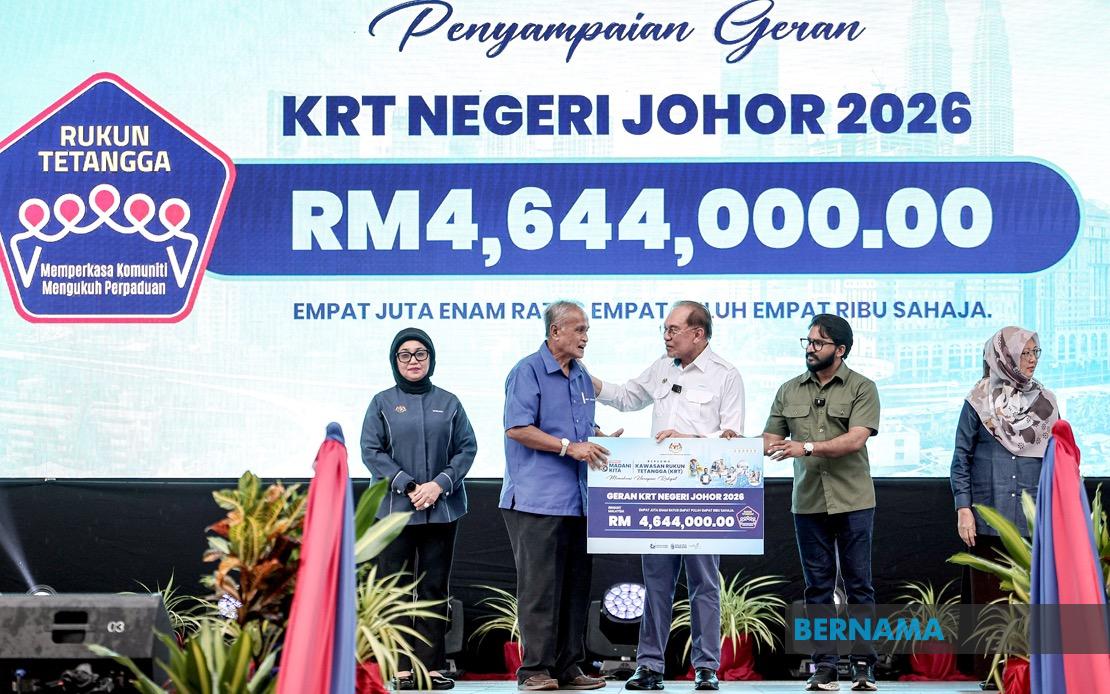
Prime Minister Datuk Seri Anwar Ibrahim has announced a significant uplift in government support for neighbourhood watch organisations across Malaysia, approving an increase in annual grants to RM10,000 per group effective from January 1, 2027. The decision, revealed during the MADANI KITA Programme gathering in Segamat on June 24, represents a substantial 67 per cent jump from the existing RM6,000 allocation that has remained unchanged for the past decade. The announcement underscores the administration's recognition that grassroots community organisations require adequate resources to fulfil their evolving responsibilities in an increasingly complex social environment.
The stagnation of neighbourhood watch funding at RM6,000 for ten consecutive years had drawn implicit criticism from the Prime Minister, who suggested that the figure had become disconnected from the real operational needs of these community-based organisations. By raising the grant to RM10,000, the government aims to provide these groups with enhanced financial capacity to undertake their duties more effectively while acknowledging the effects of inflation and rising operational costs over the previous decade. The revised allocation reflects a broader policy shift within the MADANI Government framework toward strengthening institutional support at the community level, where grassroots organisations serve as crucial intermediaries between government agencies and ordinary Malaysians.
According to Anwar, neighbourhood watch groups serve a multifaceted function within Malaysia's governance structure that extends well beyond traditional security concerns. These organisations play a vital role in reviving the spirit of consensus, consensus-building, democracy, and social unity at the neighbourhood level. Their presence and activities help security personnel and various government departments address community welfare issues while simultaneously strengthening social cohesion. By formalising increased financial support, the government signals that it views these grassroots institutions as instrumental partners in achieving broader national objectives centred on maintaining harmony and addressing localised challenges before they escalate into larger issues.
The Prime Minister employed the occasion to reinforce a central theme of his administration's governance philosophy: Malaysia's distinctive strength emerges from its multicultural, multireligious character maintained since independence. Anwar cautioned against weaponising racial, cultural, or religious differences as tools for social division, instead advocating for their celebration as defining features of national identity. This messaging, delivered at a grassroots community event, serves to contextualise the enhanced support for neighbourhood watch groups within a broader agenda of social cohesion and inclusive national development. The timing and venue of the announcement reflect an intentional strategy to communicate governance priorities directly to community-level stakeholders rather than through purely formal institutional channels.
Beyond the neighbourhood watch grants, the Prime Minister utilised the Segamat visit to announce complementary investments in social infrastructure. An immediate allocation of RM3.205 million was approved for basic infrastructure repairs at Islamic educational institutions throughout Johor, encompassing religious schools, madrasahs, study centres, and tahfiz institutions located in districts including Batu Pahat, Muar, and Segamat. This funding initiative emphasises the government's commitment to ensuring that students within Islamic educational systems benefit from comfortable and conducive learning environments. The allocation reflects recognition that educational quality depends not only on curriculum and instruction but also on the physical infrastructure within which learning occurs, and that neglect of facilities undermines educational outcomes regardless of pedagogical excellence.
The decision to prioritise infrastructure upgrades at Islamic educational institutions carries significant implications for Malaysia's broader educational landscape and for social trust within Muslim communities. By channelling targeted resources toward madrasahs and tahfiz centres, the government demonstrates acknowledgment of their role within the nation's educational ecosystem and their importance to families who have chosen these institutions for their children's moral and academic formation. The investment also signals that government support for education extends across both secular and religious institutions, reinforcing the principle of inclusive governance that respects diverse educational philosophies and community choices within constitutional frameworks.
Concurrently, Anwar approved an additional RM1.0 million allocation for critical and urgent repair works at Royal Malaysian Police quarters throughout Johor. This initiative addresses the welfare and living conditions of security personnel who bear responsibility for maintaining national peace and order. The government framed this infrastructure investment within the context of ensuring that those who sacrifice for national security receive adequate support through maintained facilities that reflect the nation's appreciation for their service. Such investments in security personnel welfare carry practical implications for recruitment and retention while also conveying symbolic recognition of the demanding nature of security work.
The three-pronged announcement—neighbourhood watch grants, Islamic educational infrastructure, and police facilities—reveals a governance approach that addresses community needs across multiple sectors simultaneously. Rather than concentrating on a single policy area, the government demonstrated through this event its intention to support various institutional layers within society, from grassroots community organisations to educational institutions to security personnel. This integrated approach reflects understanding that sustainable social development requires investments spanning civil society, education, and security infrastructure rather than privileging any single domain.
The implementation timeline, with neighbourhood watch grants commencing on January 1, 2027, allows a approximately six-month preparation period for government machinery and community organisations to adjust to the new disbursement regime. This transition timeline appears deliberately chosen to align with a new calendar year, potentially streamlining administrative processes and accounting procedures. The announcement's specificity regarding the disbursement date suggests that funding mechanisms have been incorporated into budgetary planning, lending credibility to the commitment rather than positioning it as aspirational future policy.
For Malaysian and Southeast Asian observers, these announcements reflect broader trends within the region toward recognising community-level organisations as essential partners in governance and development. Neighbourhood watch groups, despite their sometimes-overlooked status in media coverage dominated by national-level politics, serve as foundational elements of social infrastructure in multiple Southeast Asian contexts. By increasing financial support for these organisations, the Malaysian government acknowledges their continuing relevance and importance even as digital technologies and modern policing methods evolve. This recognition carries implications for how policymakers across the region view the relationship between formal government institutions and informal community organisations.
The emphasis on social cohesion within the Prime Minister's remarks also resonates with regional dynamics characterised by increasing polarisation and sectarian tensions in various Southeast Asian societies. Malaysia's explicit commitment to celebrating multicultural diversity and discouraging its weaponisation reflects lessons learned from decades of managing religious and ethnic diversity within a constitutional democracy. While Malaysia has experienced its share of communal tensions, the government's persistent messaging about unity and harmony suggests a deliberate strategy to counteract divisive narratives that might otherwise gain traction. The investment in grassroots organisations that support community consensus-building becomes, viewed in this light, an investment in the structural foundations of intercommunal peace.
The allocation of resources toward Islamic educational institutions represents another dimension of Malaysia's approach to managing religious diversity within a Muslim-majority democracy. By ensuring that institutions serving Muslim communities receive adequate infrastructure support, the government demonstrates that religious diversity and pluralism need not entail neglect of majority religious community interests. This balanced approach attempts to maintain majority Muslim confidence in the constitutional order while simultaneously protecting minority rights—a delicate equilibrium that Southeast Asian democracies must navigate. The visibility of this commitment, announced through an event specifically organised around grassroots engagement, enhances its communicative value beyond mere financial transfer.